
Causes of Diesel Engine Vibration
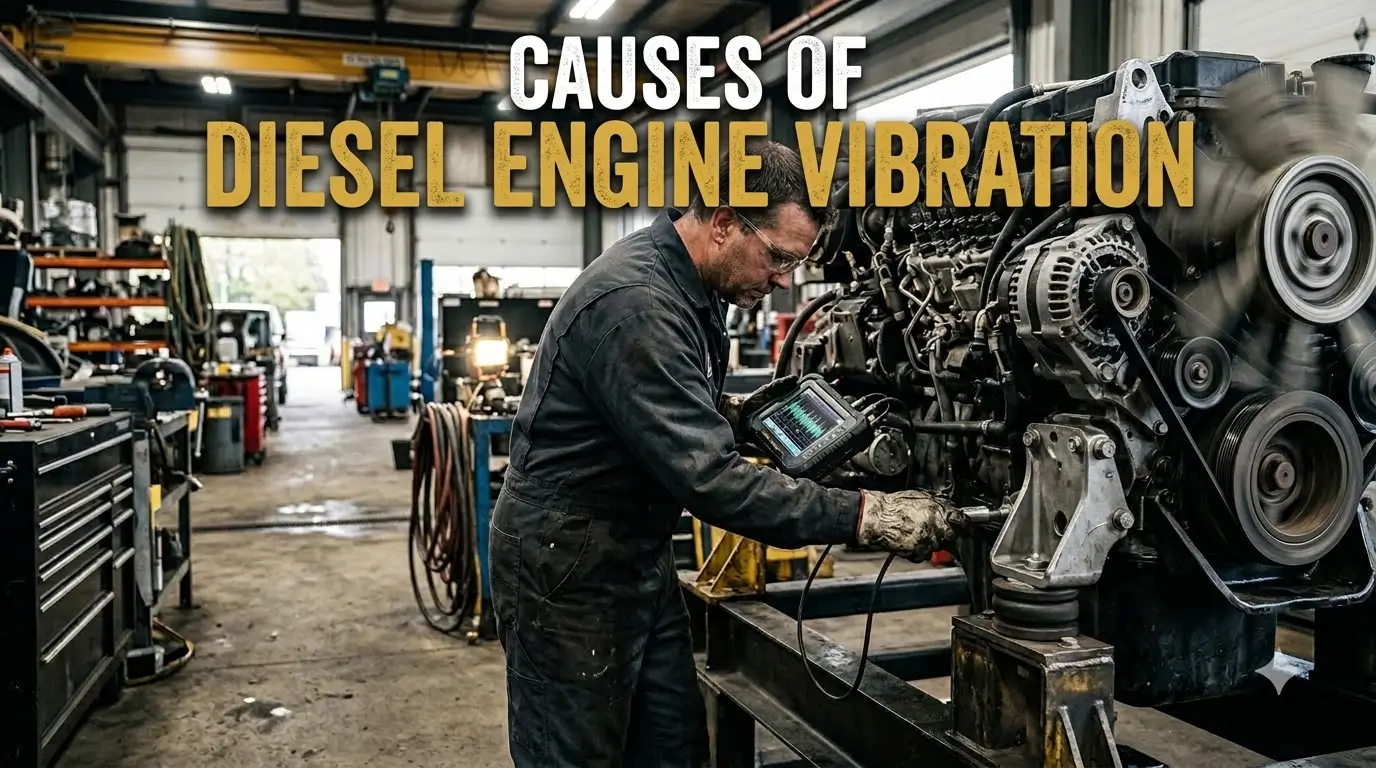
Diesel engines are designed to deliver reliable power under demanding operating conditions. However, unusual shaking, rattling, or excessive movement can indicate an underlying mechanical or fuel system problem. Whether you operate a diesel truck, generator, tractor, construction machine, or marine engine, identifying the issue early can help prevent costly repairs and unexpected downtime.
Understanding the causes of diesel engine vibration is an important part of preventive maintenance. While some movement is normal during engine operation, excessive or irregular shaking should never be ignored.
In this guide, we explain the most common reasons for diesel engine vibration, why diesel engine shaking idle can become more noticeable, and how proper inspection and diesel engine vibration analysis can help identify potential faults before they lead to major engine damage.
What Is Diesel Engine Vibration?
Diesel engine vibration is the repeated movement or oscillation produced while an engine operates. It occurs naturally because combustion generates force inside the cylinders, creating mechanical movement throughout the engine.
Engine manufacturers use components such as crankshaft counterweights, flywheels, engine mounts and vibration dampers to minimize these forces. Under normal conditions, the engine should operate relatively smoothly within its designed operating range.
However, when vibration becomes excessive, irregular, or noticeably different from normal operation, it may indicate a developing fault. This type of diesel vibration can affect engine performance, damage connected components, and reduce equipment reliability if left unresolved.
The key is to recognize when normal operating movement becomes a warning sign.
Common Causes of Diesel Engine Vibration
Several mechanical, fuel-related, and installation problems can cause an engine to shake. Identifying the correct cause is essential for selecting the appropriate repair.
1. Worn or Damaged Engine Mounts
Engine mounts secure the engine to the chassis, frame or equipment base while absorbing normal operating vibrations. Over time, rubber mounts can crack, deteriorate, harden or collapse because of heat, age and continuous exposure to engine movement.
When mounts lose their ability to absorb vibration, more movement transfers to the surrounding structure. Operators may notice shaking through the vehicle cabin, generator frame, or equipment control panel.
Common warning signs include:
Excessive engine movement during startup or shutdown.
Increased vibration at idle.
Clunking noises when engine speed changes.
Visible cracks or deterioration in the mounts.
Inspecting the mounts and replacing damaged components can resolve vibration caused by poor isolation. However, technicians should also check mounting bolts and the supporting structure to ensure the problem does not return.
2. Fuel Injector Problems and Uneven Combustion
Diesel engine repair depend on accurate fuel delivery and effective combustion to produce consistent power across all cylinders. A clogged injector, incorrect injection pattern, leaking injector, or faulty injection pump can disrupt this balance.
When one cylinder produces less power than the others, the engine may begin shaking, running roughly, or losing performance. Contaminated fuel, water in the fuel system, and worn injection components can contribute to these problems.
Fuel delivery issues are among the important diesel engine vibration causes, particularly when shaking is accompanied by difficult starting, increased fuel consumption, or visible exhaust smoke.
What to check:
Fuel quality and filter condition.
Injector spray pattern and performance.
Fuel injection timing and pressure.
Cylinder contribution or balance.
A qualified technician can use diagnostic testing to identify whether uneven combustion is responsible for the vibration rather than replacing fuel system components unnecessarily.
3. Misfiring or Weak Cylinders
A diesel cylinder must maintain sufficient compression and receive the correct amount of fuel to operate effectively. Worn piston rings, leaking valves, damaged cylinder components, or head gasket problems can reduce compression and cause uneven power production.
When one cylinder performs differently from the others, the engine may develop a rhythmic shake or rough operating pattern. This can become more noticeable during idle or when the engine is under load.
Other symptoms may include reduced power, difficult starting, unusual exhaust smoke, and increased fuel consumption.
Technicians may perform compression testing, cylinder balance testing, and other diagnostic checks to identify the affected cylinder. Correcting the underlying mechanical or combustion problem is essential to restore smooth operation.
4. Imbalanced Rotating Components
The crankshaft, flywheel, fan, pulleys and harmonic balancer are designed to rotate with minimal unwanted movement. Damage, excessive wear, incorrect installation, or imbalance in these components can generate significant vibration.
A damaged vibration damper may also fail to control torsional movement effectively, placing additional stress on the crankshaft and connected components.
Signs of rotating component problems include:
Vibration that increases with engine speed.
Unusual movement around the front of the engine.
Rattling or knocking noises.
Visible damage to the fan, pulley, or damper.
A detailed inspection is recommended when vibration becomes stronger at higher RPM, especially if the problem develops suddenly.
5. Engine and Driven Equipment Misalignment
Misalignment is another important cause of diesel engine vibration, particularly in generator sets, industrial pumps, compressors and marine installations.
When the engine and driven equipment are not aligned correctly, forces can transfer through the coupling, bearings, and mounting structure. Uneven foundations, loose fasteners, worn couplings, and soft foot conditions can make the problem worse.
A soft foot occurs when one or more equipment mounting feet do not sit evenly on the supporting base. Tightening the bolts without correcting the underlying condition can introduce additional stress into the assembly.
Misalignment-related vibration may become more noticeable under load and can contribute to premature bearing wear, coupling damage, and equipment failure.
Technicians should verify shaft alignment, inspect couplings, check the foundation and confirm that all mounting points are properly supported.
6. Loose Fasteners and Worn Bearings
Loose mounting bolts, deteriorated brackets, and worn bearings can allow components to move beyond their intended limits. This unwanted movement may produce vibration, knocking, rattling, or metallic noises.
Engine bearings support rotating components and maintain the required clearances. When bearing surfaces wear excessively, internal movement can increase and lubrication performance may be affected.
Ignoring these symptoms can lead to more extensive damage to the crankshaft, connecting rods, or other internal engine components.
If vibration occurs alongside metallic knocking, falling oil pressure, or unusual engine noise, stop operating the engine and arrange a professional inspection. Continuing to run an engine with a potentially serious bearing fault can increase repair costs significantly.
7. Air Intake, Turbocharger, and Exhaust Problems
Not every vibration originates from internal engine damage. Restrictions in the air intake, turbocharger problems, loose exhaust components, or damaged brackets can create abnormal noise and movement.
Insufficient airflow can affect combustion and engine performance, while a damaged turbocharger may cause power loss, unusual whistling or other abnormal operating symptoms.
Loose exhaust pipes and heat shields can also produce rattling that resembles a mechanical engine fault.
Inspect the air filter, intake connections, turbocharger system, exhaust supports, and associated hardware when vibration occurs alongside reduced power, abnormal noises, or changes in exhaust output.
Why Does Diesel Engine Shaking Idle Become More Noticeable?
Many operators notice diesel engine shaking idle more than vibration at higher engine speeds. This can happen because individual combustion pulses are more noticeable at low RPM and there is less rotational momentum to smooth out the fluctuations.
Several factors can contribute to rough idle:
Worn engine mounts: Damaged mounts transfer more vibration into the chassis or equipment frame.
Fuel injector problems: Uneven fuel delivery can cause inconsistent combustion between cylinders.
Low compression: A weak cylinder may contribute less power than the others.
Cold engine operation: Cold conditions can temporarily affect combustion and engine smoothness.
Incorrect idle settings or control issues: Problems with engine management or fuel delivery may affect idle stability.
If diesel engine shaking becomes less noticeable when RPM increases, technicians should investigate fuel delivery, cylinder balance and engine mounts. If the vibration becomes stronger as engine speed rises, rotating component imbalance or other mechanical faults may require closer examination.
These patterns can help narrow down the possible causes, but testing is necessary to confirm the actual fault.
How Diesel Engine Vibration Analysis Helps Identify Problems
Visual inspections can reveal loose components, damaged mounts, or obvious signs of wear. However, some mechanical faults require more detailed testing.
Professional diesel engine vibration analysis involves measuring vibration, examining its frequency characteristics, and comparing the results with suitable baseline readings or equipment-specific limits.
The process may include:
1. Measuring vibration: Technicians use vibration sensors or analyzers to record vibration at selected engine locations, mounting points, and connected equipment.
2. Comparing operating conditions: Readings may be taken at idle, different engine speeds, and relevant load conditions to understand when the vibration occurs.
3. Examining frequency patterns: Vibration frequency and amplitude can help identify possible imbalance, misalignment, looseness, or bearing-related problems. Frequency patterns are diagnostic clues, not definitive proof of a specific fault.
4. Checking supporting evidence: Findings are compared with engine performance, noise, temperature, lubrication condition, and other diagnostic results.
5. Confirming the repair: Follow-up measurements and operational checks help determine whether the repair has reduced the abnormal vibration.
A structured diagnostic process helps technicians avoid unnecessary parts replacement and focus on the underlying problem.
Practical Steps to Reduce Diesel Engine Vibration
Although the correct repair depends on the fault, a consistent maintenance routine can help prevent several common vibration-related problems.
Inspect engine mounts, brackets, and mounting bolts regularly.
Replace fuel filters according to the manufacturer's maintenance schedule.
Use appropriate fuel and investigate signs of contamination.
Check for abnormal engine noise, smoke, or power loss.
Inspect rotating components, pulleys, fans, and vibration dampers.
Verify engine-to-equipment alignment where applicable.
Monitor oil pressure and investigate signs of bearing wear.
Record vibration readings when condition-monitoring equipment is available.
Avoid adjusting engine settings or replacing components based on vibration alone. Follow the engine manufacturer's service procedures and use qualified technicians for internal engine or fuel system repairs.
When Should You Call a Diesel Engine Specialist?
Some vibration problems can be traced to loose hardware or deteriorated mounts, but other symptoms may indicate a more serious mechanical fault.
Arrange a professional inspection if you notice:
Sudden or severe engine shaking.
Metallic knocking accompanied by vibration.
Significant power loss or abnormal exhaust smoke.
Unusual oil pressure or overheating.
Vibration that becomes progressively worse.
Excessive movement in the engine or connected equipment.
Stop operating the engine when vibration is severe or accompanied by signs of potentially serious damage. Continuing to run the equipment may turn a repairable problem into a major engine failure.
Final Thoughts:
Understanding the causes of diesel engine vibration helps equipment owners and maintenance teams identify warning signs before they develop into more serious problems. From worn engine mounts and injector faults to rotating component imbalance and misalignment, excessive vibration can have several underlying causes.
The most effective approach combines regular inspections, appropriate maintenance, and accurate diagnosis. When the source is unclear or the symptoms are severe, professional diesel engine vibration analysis can help identify the fault and guide the correct repair.
If your diesel engine is shaking, producing unusual noises, or losing performance, arrange an inspection before the problem causes further damage. Early diagnosis helps protect equipment reliability, control maintenance costs, and minimize unexpected downtime.